


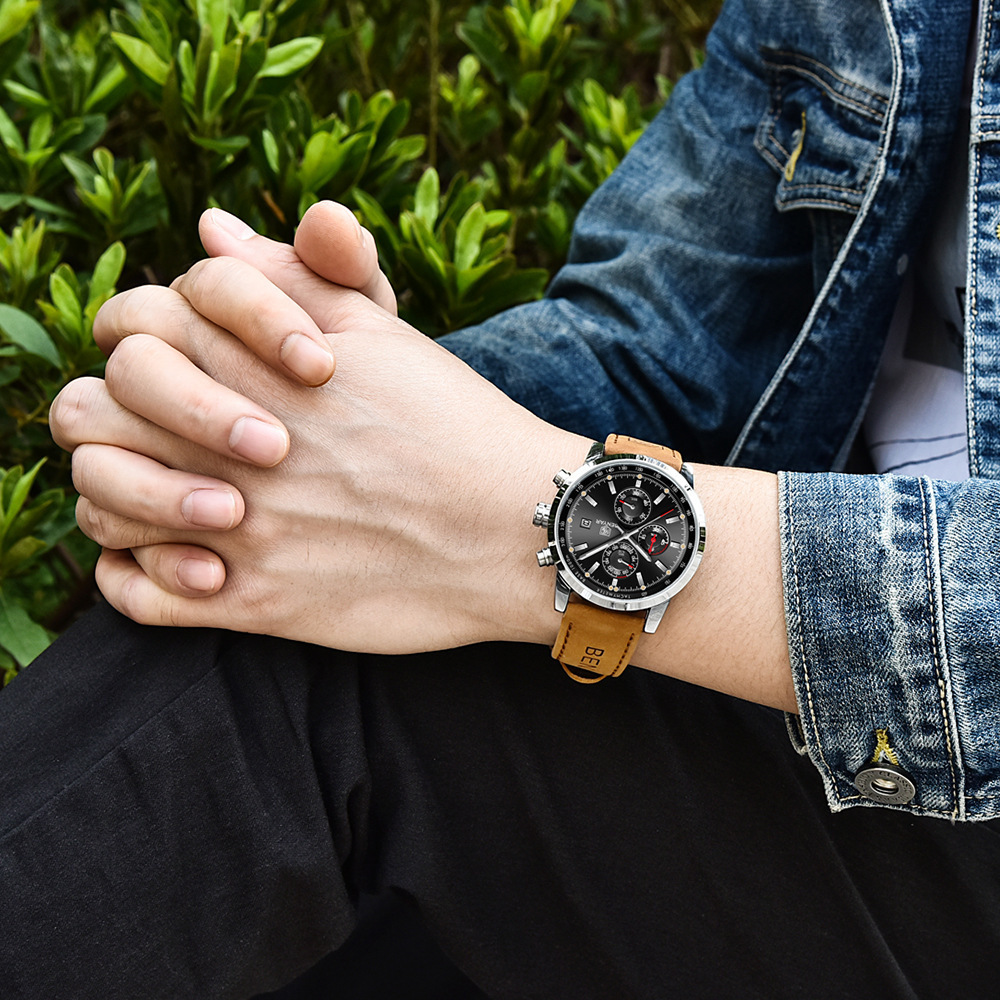
Have you ever found yourself browsing through a collection of beautiful timepieces, holding one up, and wondering, “Is this a men’s or a women’s watch?” You’re not alone. In an era where personal style reigns supreme, the traditional labels can feel confusing. While many today choose to wear whatever watch speaks to them, understanding the classic difference between a mens watch and a womens watch can be incredibly helpful. It guides you toward a piece that not only fits your wrist physically but also aligns with your aesthetic vision. So, what are these distinctions, and how important are they really? Let’s wind the crown and delve into the details.
The Unmistakable Divide: Size and Proportion
When you first look at a watch, the most immediate thing you notice is its size. This is, without a doubt, the most significant difference between mens and womens watches.
Traditionally, men’s timepieces are designed with a larger, more prominent presence on the wrist. You’ll typically find them with case diameters ranging from 38mm to 46mm and even beyond. They often have a thicker case profile, giving them a substantial, tool-like feel. This larger canvas also allows for more complex dial layouts and multiple complications.
On the other hand, women’s watches have historically been crafted with elegance and delicacy in mind. The classic case diameter for a woman’s watch often falls between 26mm and 34mm. The cases are slimmer and sit closer to the wrist, creating a subtle and refined accessory rather than a statement piece. Of course, the modern landscape is changing. It’s now common and stylish to see anyone rocking a watch size that defies these traditional norms, with many women confidently wearing larger, traditionally masculine models for a bold, fashion-forward look.
Design Philosophy: Bold Statement vs. Subtle Elegance
Beyond mere measurements, the core design language speaks volumes about the intended difference between a mens watch and a womens watch.
Men’s watch design often leans into themes of strength, adventure, and functionality. The designs can be bold, with heavy, pronounced lugs that anchor the watch to the strap. The crown—the knob used for setting the time—is often larger and easier to grip, sometimes with protective guards. Bezels (the ring surrounding the crystal) might be intricate, featuring tools like a tachymeter for calculating speed or a rotating scale for tracking elapsed time. The overall impression is one of robustness and capability.
In contrast, the design of a woman’s watch frequently prioritizes ornamentation and grace. The lines are softer, the lugs are more slender, and the crown is usually smaller and more discreet. There is a stronger emphasis on the watch as a piece of jewelry. This is where you’ll often find beautiful details like diamond hour markers, iridescent mother-of-pearl dials, and elegant use of color. The goal is to create a piece that complements an outfit with a touch of sophistication and sparkle.
Straps and Bracelets: The Finishing Touch
The band of a watch is like the frame for a beautiful painting; it completes the look. The choice of strap further highlights the difference between mens and womens watches.
Take a look at a typical men’s watch bracelet or strap. They are almost always wider, typically 20mm or more, contributing to the watch’s solid and sturdy feel. The materials used are robust: thick links of stainless steel, durable leather that develops a patina over time, or functional rubber for sports and diving watches.
For women’s watches, the straps are noticeably narrower, usually in the 14mm to 18mm range. This slimmer profile enhances the delicate aesthetic. While stainless steel is still popular, the bracelets are often crafted with smaller, more intricate links. You’ll also see a greater use of materials like ceramic, which offers a smooth and lightweight feel, and a wider array of leather colors and textures. Two-tone combinations, mixing steel and rose gold, are also a perennial favorite in women’s collections.
Functionality and Features: What’s on the Dial?
Historically, the intended use of the watch influenced its features, creating another layer of difference between a mens watch and a womens watch.
Men’s watches are more likely to be equipped with what are known as “complications”—functions that go beyond simply telling the time. These can include chronographs (stopwatches), GMT functions for tracking a second time zone, day-date windows, and highly specialized features like helium escape valves for professional divers. The focus is often on technical prowess and utility.
While women’s watches can certainly have these features, the classic approach has been to prioritize simplicity and elegance. A clean, uncluttered dial is often preferred. When complications are present, they tend to be of a more poetic nature, like a moon phase indicator, which adds a touch of classic romance to the timepiece. The primary “feature” is often its beauty and its ability to serve as a stunning piece of jewelry.
Color and Material Palettes
Finally, the available color and material finishes often follow distinct paths, rounding out the overall difference between mens and womens watches.
The men’s watch palette is often more restrained and classic. Think in terms of black, white, deep blue, silver, and dark green. The material finishes are typically straightforward: stainless steel, black PVD coatings, titanium, and yellow gold.
The world of women’s watches embraces a much broader and sometimes more playful color spectrum. Alongside the classics, you’ll find rose gold, champagne, pearl white, pastel blues and pinks, and a variety of vibrant hues. There is also a greater emphasis on mixed materials, such as two-tone bracelets and bezels set with brilliant diamonds or other gemstones.
The Final Word: Your Wrist, Your Rules
So, after exploring all these aspects, what is the difference between mens and womens watches? The answer lies in a combination of traditional size guidelines, design intentions, and feature sets. However, the most important takeaway is that these are not rigid rules but rather a roadmap.
The world of horology is increasingly embracing gender-neutral and unisex designs. The perfect watch for you is the one that you are drawn to, that feels comfortable on your wrist, and that reflects your unique personality. Whether that’s a robust, feature-packed “men’s” chronograph or a delicate, diamond-adorned “women’s” piece, confidence is the best accessory you can wear. So, use this guide to understand the landscape, but let your personal style have the final say.